Best Time to Visit Jim Corbett National Park
Jim Corbett National Park is one of India’s most celebrated wildlife sanctuaries. Every year, millions of wildlife enthusiasts visit this beautiful park from both India and abroad. It is famous for its diverse flora and fauna. Here you can see many endangered species and rare plants. To explore the best of Jim Corbett National Park, you need to consider certain things, such as the ideal time to visit. These small considerations will make your trip more worthwhile. Another fact is that this national park was the first one to be part of the Project Tiger initiative. It is famous for being home to 260 + Royal Bengal Tigers. This beautiful park is located in Uttarakhand, including Garhwal, Almora, Nainital, and Pauri regions. The park's location in the Nainital district gives it a subtropical highland climate characterized by distinct seasons. This leads to sunny summers, chill winters, and rainy monsoons.
Seasons in Jim Corbett National Park: What to Expect Year-Round
Winter Season (From November to February)Winters are considered to be the best time to visit Jim Corbett National Park. Not only Corbett, other national parks also, including Ranthambore National Park, Kanha National Park, etc. Here, in winters the temperatures are very pleasant, typically ranging from 5 to 30 degrees Celsius. Animals such as tigers, elephants, leopards, and many others are more active during the day, and they are easily visible when the sky is clear. In the winter, many migratory birds visit the area. This is the best time to go bird watching in Jim Corbett National Park, as well as viewing the park's many animals on a jeep or canter safari.
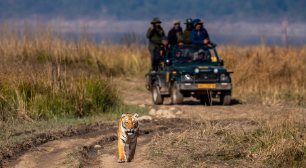
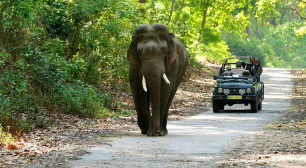
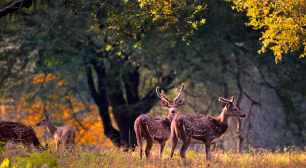
The summer months, also known as the shoulder season. It attracts a large number of tourists from around the world. Summer weather is ideal for jeep or canter safaris. At this time, you can see a great number of wild animals. Jim Corbett National Park is ideal for safari rides because the dense vegetation thins out during the summer months when it does not rain. However, in summer, the weather is hot, and can reach up to 46 degrees Celsius. This can make visitors slightly uncomfortable.
Monsoon Season (From July to September)The national park is only partially open from July to September because of safety concerns and the need for the forest to grow back. The monsoon also brings a lot of rain to Corbett. People who want to travel during the off-season can still get to the buffer zones, which offer a limited safari experience. The landscape changes into a lush paradise, but as the plants grow thicker and the animals become less active, it becomes harder to see them. It might be harder to drive through the educated areas on safari if the roads are wet. The temperature is between 24 and 31 degrees Celsius, and the humidity is high.
What’s the Weather Like in Corbett? Month-by-Month Temperature Guide
| Month | Tourists’ Preference | Min Temperature (°C) | Max Temperature (°C) |
|---|---|---|---|
| January | Peak Season | 5°C | 18°C |
| February | Peak Season | 7°C | 22°C |
| March | Peak Season | 12°C | 28°C |
| April | Shoulder Season | 18°C | 35°C |
| May | Shoulder Season | 22°C | 40°C |
| June | Shoulder Season | 25°C | 38°C |
| July | Off Season | 24°C | 32°C |
| August | Off Season | 24°C | 31°C |
| September | Off Season | 23°C | 31°C |
| October | Peak Season | 18°C | 30°C |
| November | Peak Season | 12°C | 26°C |
| December | Peak Season | 7°C | 20°C |